
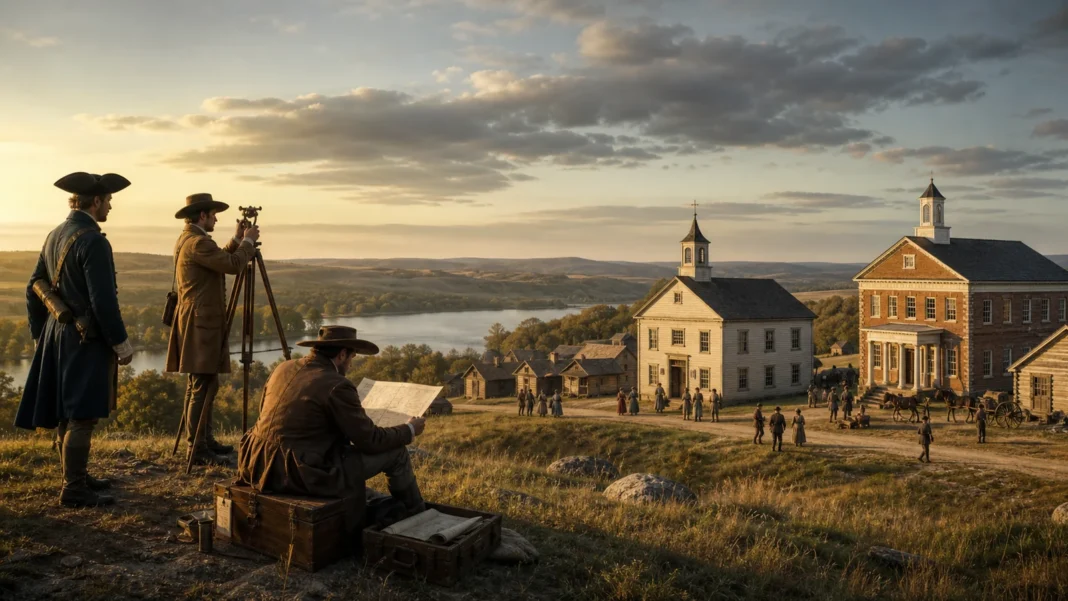

The quick answer: The Confederation Congress adopted the Northwest Ordinance on July 13, 1787. It organized the territory northwest of the Ohio River, provided stages toward statehood, guaranteed certain rights, encouraged education, and prohibited slavery in the territory.
A national question before the nation
The young republic possessed western lands but needed a lawful way to govern them. The ordinance treated territories as future states rather than permanent colonies. That principle helped the union expand through admission of states with equal constitutional standing.
Government, rights, and education
The law described a staged path from appointed territorial government to an elected assembly and, at a specified population, an application for statehood. Its bill of rights protected worship, habeas corpus, jury trial, property, and contracts. It also declared that schools and the means of education should be encouraged.
Promise and contradiction
The ordinance prohibited slavery in the territory, an important restriction, but enforcement was uneven and the provision included a fugitive-slave clause. Its stated commitment to good faith toward Native nations was repeatedly violated as settlement advanced through Indigenous homelands.
A blueprint with consequences
Ohio, Indiana, Illinois, Michigan, Wisconsin, and part of Minnesota eventually emerged from the region. The ordinance’s legacy shows why administrative rules matter: a method for surveys, government, rights, and admission can shape millions of lives. At 250, the document rewards both pride in orderly self-government and honesty about expansion’s human cost.
Quick facts
- The Confederation Congress adopted the ordinance on July 13, 1787.
- It anticipated no fewer than three and no more than five states in the territory.
- Its staged process linked population growth to representative government and statehood.
- It protected several civil liberties and prohibited slavery in the territory.
Questions readers ask
Which modern states came from the Northwest Territory?
Ohio, Indiana, Illinois, Michigan, Wisconsin, and the northeastern portion of Minnesota.
Did the ordinance prevent all slavery in practice?
No. The legal prohibition was consequential, but indenture, evasions, and the fugitive provision complicated its effect.
Explore the sources
These primary and public-history resources are a good place to continue:
250 Pulse tells the American story with context, confidence, and room for every neighbor.