
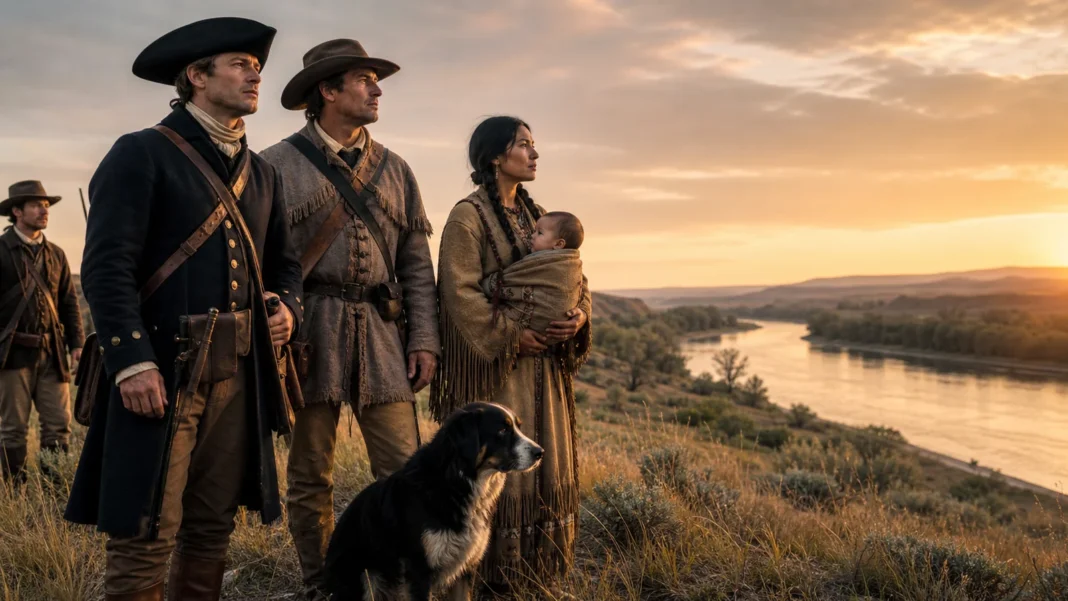

The quick answer: The Lewis and Clark Expedition traveled from 1803 to 1806 to explore routes, geography, plants, animals, trade possibilities, and diplomatic relations across western North America. Its achievements depended heavily on Native knowledge and must be understood alongside its consequences for Tribal nations.
The Corps of Discovery
President Thomas Jefferson commissioned the expedition as the Louisiana Purchase transformed the nation’s ambitions. Meriwether Lewis and William Clark led a party that traveled the Missouri River, crossed the Rocky Mountains, reached the Pacific watershed, and returned with journals, specimens, and maps.
Many people made the journey
The familiar title hides a larger cast. Enlisted soldiers, boatmen, the enslaved York, Sacagawea and Jean Baptiste Charbonneau, interpreters, and many Native diplomats and knowledge holders made the expedition possible. The Corps met more than fifty Tribal nations and relied on food, directions, horses, shelter, and information they provided.
Knowledge and consequence
The records expanded U.S. scientific and geographic knowledge. They also supported expanding claims, trade, settlement, and federal power across lands already governed and inhabited by Native nations. For many Tribes, the expedition marked the beginning of accelerating disruption and loss.
Follow the trail with both eyes open
The modern national historic trail crosses the homelands of more than sixty Tribal nations. That makes it a place to admire endurance and curiosity while learning multiple perspectives. Mature patriotism can hold achievement and consequence together; a fuller story makes the national memory stronger, not smaller.
Quick facts
- The expedition operated from 1803 to 1806.
- The modern historic trail stretches nearly 4,900 miles.
- The Corps met more than fifty Tribal nations.
- The party recorded geography and hundreds of plants and animals not previously described by U.S. science.
Questions readers ask
Did Lewis and Clark discover the West?
No. Native nations had lived, traveled, governed, and traded across these lands for thousands of years. The expedition mapped and described them for the U.S. government.
Why was Sacagawea important?
Her language skills, geographic knowledge, presence, and relationships helped with communication, navigation, food gathering, and diplomacy.
Explore the sources
These primary and public-history resources are a good place to continue:
- National Park Service: Lewis and Clark History and Culture
- National Park Service: Lewis and Clark Basic Facts
250 Pulse tells the American story with context, confidence, and room for every neighbor.