
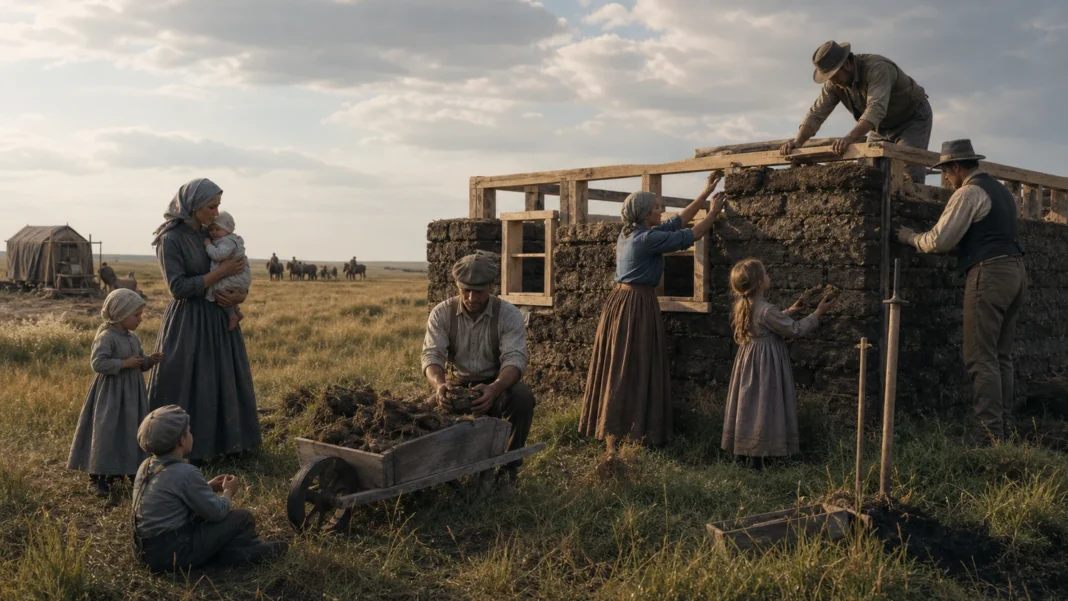

The quick answer: The Homestead Act of 1862 offered eligible claimants up to 160 acres of surveyed public land if they filed a claim, lived on and improved the land, and met legal requirements. It changed settlement patterns but also intensified Indigenous dispossession.
Land for actual settlers
Signed by Abraham Lincoln during the Civil War, the law aimed to put public land into the hands of people who would live on and cultivate it. Claimants generally had to be heads of households or at least twenty-one, pay filing fees, and prove residence and improvements after five years.
Who found opportunity
Citizens and intended citizens could file, and the text included women who met its conditions. Immigrants, formerly enslaved people, single women, and families used the program. For some, land ownership created security and a future otherwise closed to them. For many others, isolation, weather, debt, and poor land made success difficult.
Public land was not empty land
Federal maps labeled acreage available, but Native nations had existing relationships, economies, and sovereignty on those lands. Homesteading expanded alongside treaties made under pressure, forced removals, warfare, reservation policy, and ecological change. The opportunity for one family could be connected to dispossession of another people.
An honest inheritance
The Homestead Act captures two American stories at once: wider individual opportunity and state-driven continental expansion. At 250, holding both is essential. We can honor settlers’ endurance, recognize those excluded or displaced, and study how land policy continues to shape wealth, agriculture, and community.
Quick facts
- President Lincoln signed the Homestead Act on May 20, 1862.
- A standard claim could cover up to 160 acres.
- Claimants generally had to reside on and improve the land for five years.
- The program extended into the twentieth century, with the last federal homestead patent issued in 1988.
Questions readers ask
Was homestead land free?
Claimants paid fees and bore the cost of travel, construction, cultivation, and survival. They earned title by satisfying legal requirements.
Could women claim homesteads?
Yes. Women who qualified as heads of household or otherwise met the law’s conditions could file claims.
Explore the sources
These primary and public-history resources are a good place to continue:
250 Pulse tells the American story with context, confidence, and room for every neighbor.