
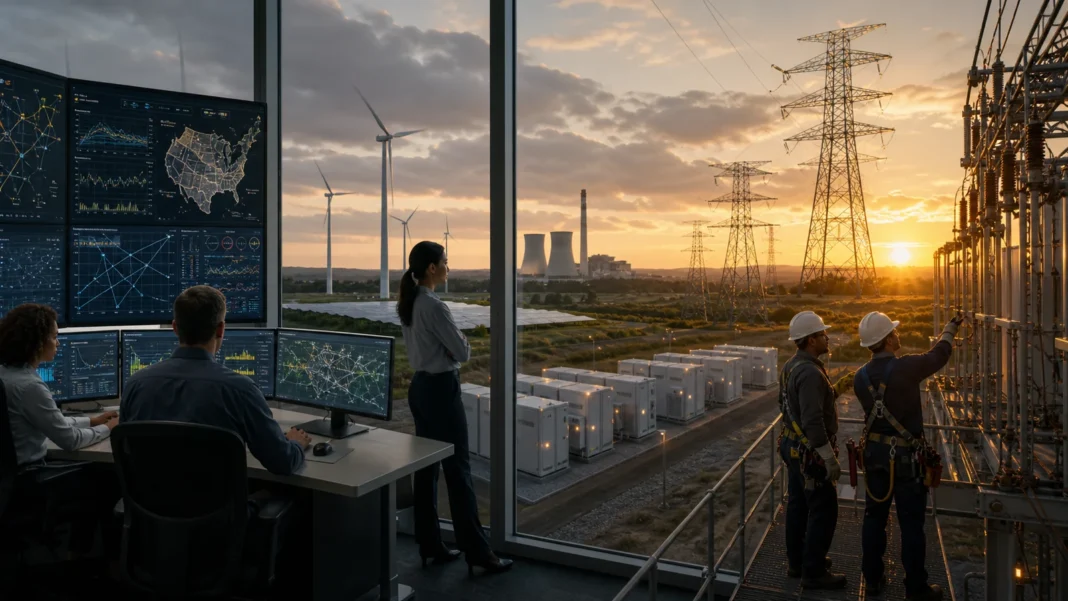

The quick answer: Grid modernization upgrades how electricity is generated, transmitted, distributed, measured, protected, and managed. The goals include reliability, resilience, affordability, cybersecurity, faster connection of new resources, and better control of two-way power flows.
A machine the size of a continent
Electric supply and demand must remain closely balanced across linked networks. Operators coordinate power plants, high-voltage transmission, substations, local distribution, and protective equipment in real time. Much of the system was built for one-way flows from large generators to passive customers.
The load and resource map is changing
Data centers, manufacturing, electric vehicles, heating, rooftop solar, batteries, and weather-sensitive generation alter when and where electricity moves. New transmission can connect regions and diverse resources; advanced distribution systems can manage local generation, flexible demand, storage, and outages.
Resilience is more than hardening
Wildfire, heat, cold, storms, flooding, physical attack, and cyber incidents create different risks. Utilities need vegetation management, redundant paths, black-start capability, secure controls, spare equipment, forecasting, islandable microgrids where useful, and recovery plans practiced with communities.
Build trust along with lines
Permitting and siting can be slow because infrastructure affects landowners, Tribes, wildlife, bills, local economies, and views. Better planning engages communities early and shares benefits credibly. At 250, a modern grid is nation-building in its least glamorous and most essential form: dependable power that prepares every region to participate in the next economy.
Quick facts
- The U.S. grid includes generation, transmission, distribution, controls, markets, and customer equipment.
- Electric supply and demand must be balanced continuously.
- Modernization includes sensors, forecasting, power electronics, storage, cybersecurity, and new lines.
- Reliability, resilience, affordability, and security must be evaluated together.
Questions readers ask
Why can’t batteries replace transmission?
Storage shifts electricity across time; transmission moves it across distance. A reliable, affordable system often needs both plus flexible demand and generation.
Does modernization only mean renewable energy?
No. It includes integrating all generation sources, replacing aging equipment, improving operations, protecting controls, and managing changing customer needs.
Explore the sources
These primary and public-history resources are a good place to continue:
- U.S. Department of Energy: Grid Modernization Initiative
- U.S. Department of Energy: Grid Deployment Office
250 Pulse tells the American story with context, confidence, and room for every neighbor.