
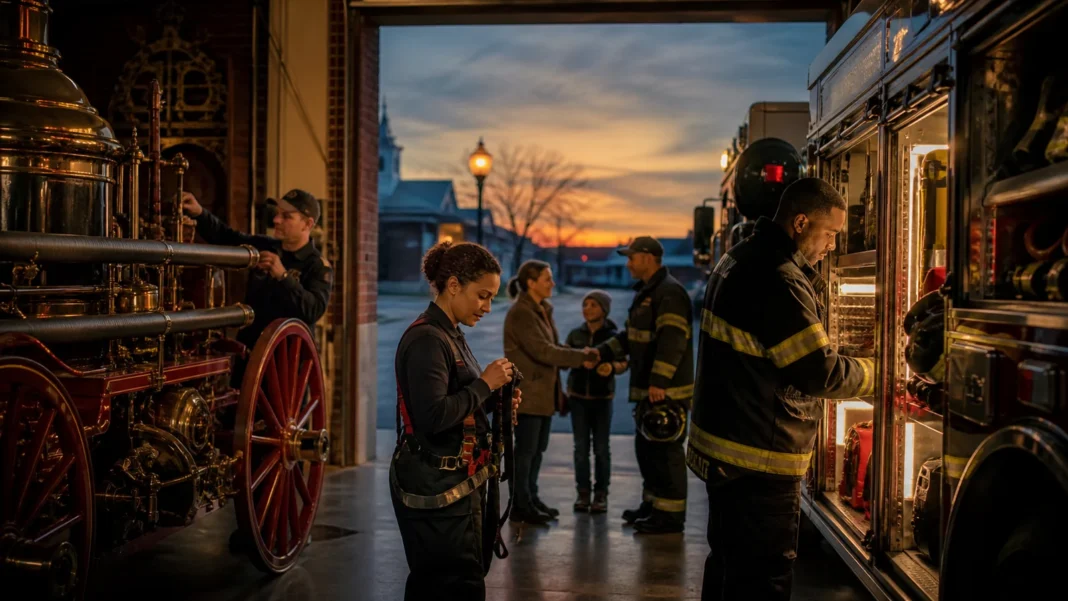

The quick answer: Volunteer firefighters make up almost 70 percent of the U.S. fire service. They provide trained emergency response—often in rural and small communities—while balancing service with jobs, families, ongoing education, and department fundraising.
A local system with deep roots
Americans have organized community fire companies since the colonial era. Local control produced many forms: fully volunteer departments, career departments, and combination systems. In places with broad territory and limited tax bases, volunteers remain the practical backbone of fire protection and emergency medical response.
Volunteer does not mean untrained
Members learn fire behavior, protective equipment, rescue, incident command, hazardous materials awareness, medical response, and safe vehicle operations. Training is continuous because the risks are real. Departments also inspect equipment, teach prevention, maintain stations, and prepare long before a call arrives.
The recruitment challenge
Modern work schedules, commuting, aging membership, rising training demands, and family responsibilities make staffing difficult—especially during weekdays. Supporting volunteers can mean predictable funding, mental-health resources, safe equipment, flexible training, childcare solutions, and a culture that welcomes a wider range of neighbors.
Readiness as a civic habit
A volunteer company represents something sturdy in American life: local people accepting shared risk for people they may barely know. At 250, honoring that service should include practical support. Appreciation is meaningful; enough trained responders, safe apparatus, and sustainable schedules are better.
Quick facts
- Almost 70 percent of U.S. firefighters are volunteers.
- Volunteer and combination departments are especially important in rural areas.
- Members respond to medical emergencies, crashes, disasters, and rescues as well as fires.
- Recruitment, retention, funding, health, and safety are major national concerns.
Questions readers ask
Are volunteer firefighters paid?
Arrangements vary. Many receive no salary; some departments provide stipends, reimbursements, tax benefits, pensions, or per-call compensation.
How can residents help without becoming firefighters?
Support prevention programs, follow burn and evacuation guidance, donate if appropriate, help with administrative work, and consider non-operational department roles.
Explore the sources
These primary and public-history resources are a good place to continue:
- U.S. Fire Administration: Volunteer Fire Service Resources
- U.S. Fire Administration: National Fire Department Registry
250 Pulse tells the American story with context, confidence, and room for every neighbor.