
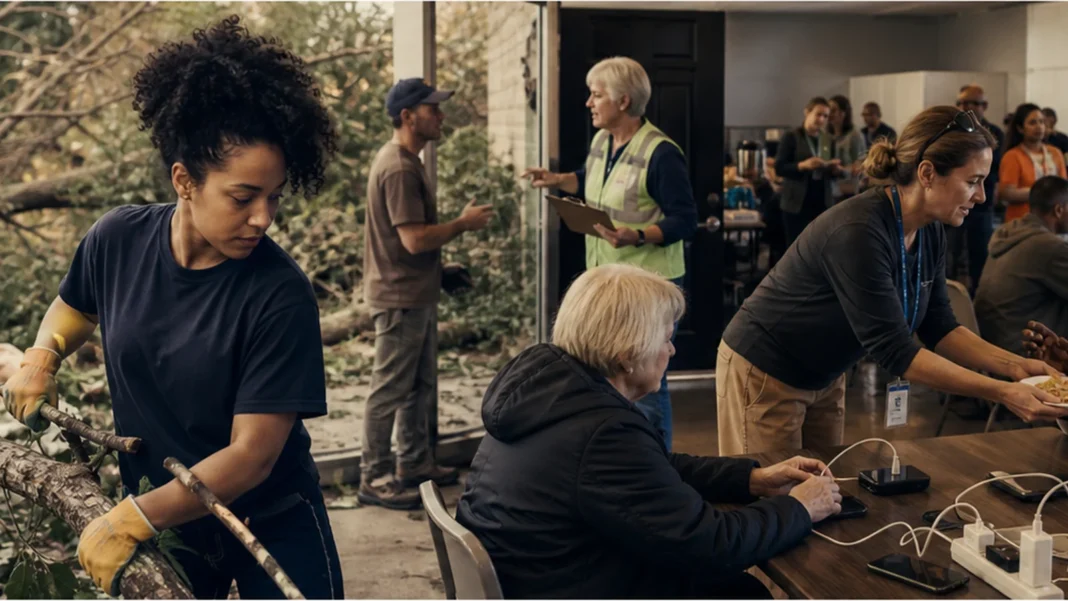

The quick answer: Voluntary, faith-based, and community organizations are essential partners in disaster response and recovery. Effective volunteering is coordinated through trusted groups so that skills, donations, and labor match verified needs without adding confusion.
Neighbors are the first system
Before outside resources arrive, nearby people check homes, share information, provide first aid, clear safe routes, and shelter one another. Community Emergency Response Team training helps residents organize these instincts around safety, basic response skills, and established emergency plans.
Coordination multiplies good intentions
Unrequested goods can clog roads and warehouses, and spontaneous volunteers can enter dangerous areas without protection. Emergency managers and voluntary-agency liaisons connect nonprofits, faith groups, government, and community leaders so resources reach unmet needs and work is not needlessly duplicated.
Recovery outlasts the news
Meals and shelter matter immediately, but rebuilding can take years. Case management, legal help, debris removal, housing repair, mental-health support, childcare, transportation, and assistance for people with disabilities are part of long-term recovery. Local organizations often remain after national attention leaves.
Prepare before the siren
The best time to join a trusted group, learn first aid, map neighborhood needs, or make a family plan is before disaster. At 250, preparedness is a practical form of national confidence: not the belief that nothing bad will happen, but the determination to meet hardship together and recover more fairly.
Quick facts
- Voluntary organizations support both immediate response and long-term recovery.
- FEMA coordinates with voluntary, faith-based, and community partners.
- Cash donations are often more flexible than unsolicited goods.
- CERT programs train residents in organized community emergency response.
Questions readers ask
Should I travel directly to a disaster area to help?
Usually not without an assignment. Register with a trusted organization and wait for instructions so you do not create added risk or demand.
Why is cash often preferred?
It can be directed to current priorities, supports local purchasing, avoids sorting and transport costs, and adapts as needs change.
Explore the sources
These primary and public-history resources are a good place to continue:
- FEMA: Volunteers and Voluntary Agency Coordination
- FEMA: Community Emergency Response Team Introduction
250 Pulse tells the American story with context, confidence, and room for every neighbor.