
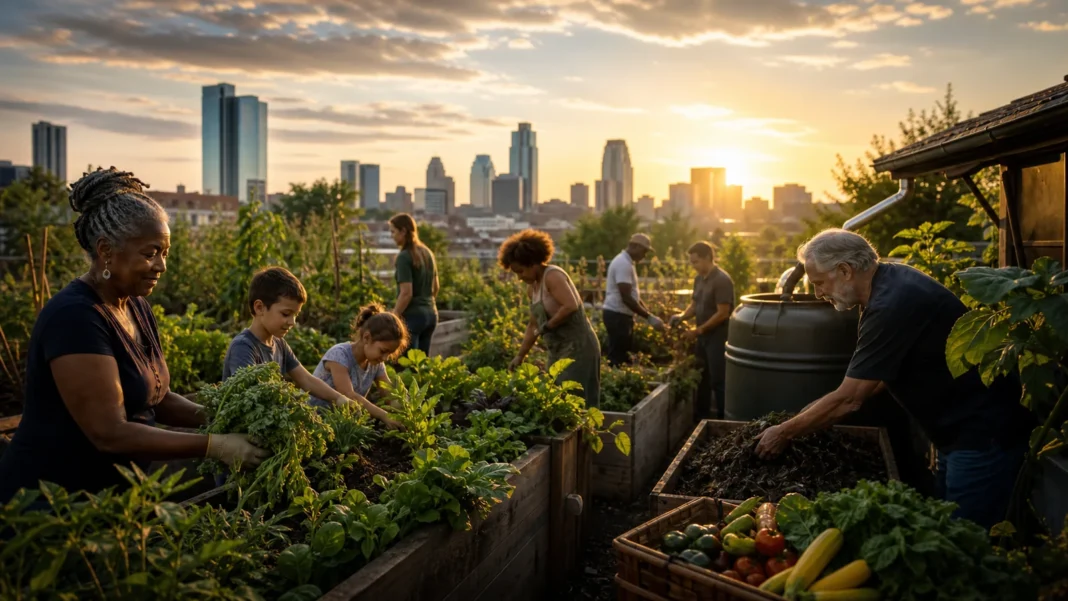

The quick answer: Community gardens are shared growing spaces managed by residents, organizations, schools, or public agencies. They can increase access to fresh food, teach practical skills, improve green space, and build sustained connections among neighbors.
An old American response
Americans have repeatedly organized gardens during economic stress, war, migration, and urban change. World War II Victory Gardens supplied a substantial share of fresh produce while supporting morale. Some surviving sites evolved into long-running community gardens.
Many kinds of harvest
A plot can yield tomatoes, herbs, flowers, culturally important crops, and compost. It can also yield knowledge: when to plant, how to improve soil, how to save seed, and how different food traditions use the same harvest. Children see food as a living process rather than a packaged object.
Shared land needs shared rules
Successful gardens require access to land and water, clear plot agreements, inclusive leadership, accessible paths, soil testing, tool storage, and plans for conflict and turnover. Stewardship is not automatic. It grows through reliable small tasks and transparent decisions.
A civic space at human scale
Gardens turn vacant or underused ground into a place where neighbors encounter one another over time. At America’s 250th, that is valuable infrastructure. A garden cannot solve food insecurity or climate stress alone, but it can teach the habits larger solutions need: patience, reciprocity, local knowledge, and care for a shared place.
Quick facts
- Victory Gardens grew in yards, schools, parks, rooftops, public land, and vacant lots.
- In 1944, an estimated 18.5 million gardeners participated.
- Some present-day community gardens trace their roots to the wartime program.
- Modern gardens may focus on food, education, habitat, culture, or a mix of purposes.
Questions readers ask
Do community gardens replace food assistance?
No. They can supplement food and build skills, but reliable food security also depends on income, access, public programs, and broader systems.
What makes a garden last?
Secure land access, water, shared governance, welcoming participation, maintenance plans, and relationships with the surrounding community.
Explore the sources
These primary and public-history resources are a good place to continue:
- National Park Service: Victory Gardens on the World War II Home Front
- U.S. Forest Service: Social Benefits from Urban Greening Projects
250 Pulse tells the American story with context, confidence, and room for every neighbor.