
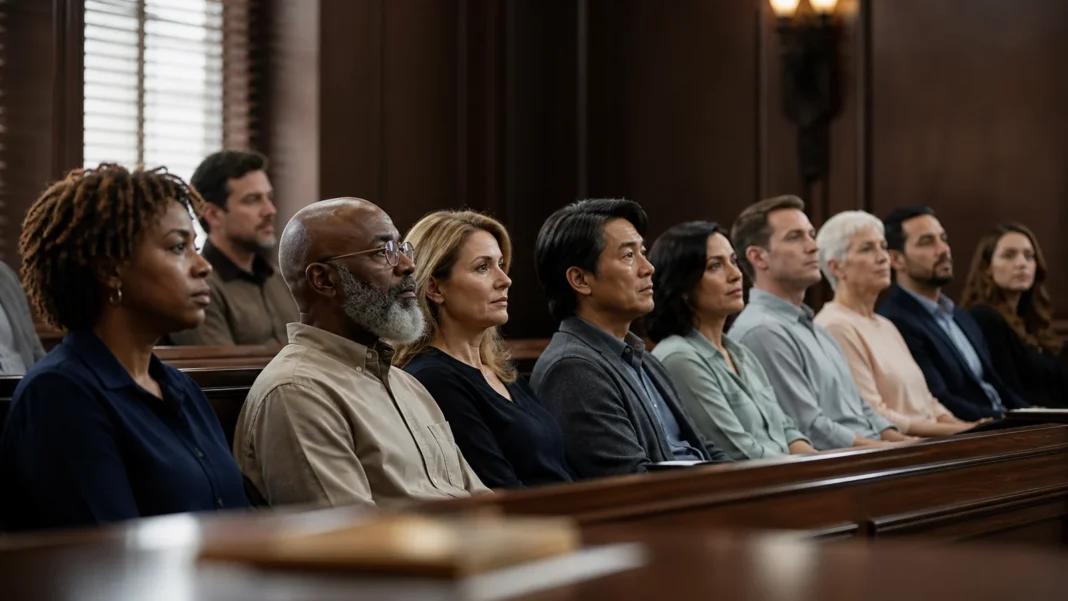

The quick answer: Jury service allows eligible citizens to help determine facts in civil and criminal cases. It is one of the most direct ways Americans participate in the judicial branch.
A constitutional place for citizens
The Constitution and Bill of Rights preserve jury trials in significant criminal and civil matters. A judge explains the law, but jurors assess admitted evidence, weigh testimony, and determine facts. That division places public judgment inside the administration of justice.
From community to jury box
Federal courts randomly select potential jurors from counties in their districts, generally using voter lists and sometimes additional sources. Questionnaires establish basic qualifications. In court, voir dire helps identify bias or other reasons a person should not serve on a particular case.
Attention is the service
Most jury work is not dramatic. It involves arriving on time, listening without outside research, following instructions, separating sympathy from proof, and discussing evidence honestly with strangers. Those disciplined habits are the contribution.
A small room with a large idea
At 250, the jury room remains a powerful American space. People who may disagree on politics, background, or experience are asked to apply one standard to one record and reach a lawful decision. Self-government sometimes looks exactly like that: patient attention under shared rules.
Quick facts
- Federal courts randomly select prospective jurors from their districts.
- Voir dire is the questioning process used to evaluate potential jurors.
- Judges instruct juries on the law; juries determine facts.
- Serving on a jury is both a legal duty and a direct form of civic participation.
Questions readers ask
Does receiving a summons mean I will sit on a jury?
No. It means you may be part of a jury pool. Qualification, scheduling, and voir dire determine who ultimately serves.
Why can jurors not research the case themselves?
Verdicts must be based on evidence admitted in court, where both sides can test it under the same rules.
Explore the sources
These primary and public-history resources are a good place to continue:
250 Pulse tells the American story with context, confidence, and room for every neighbor.