
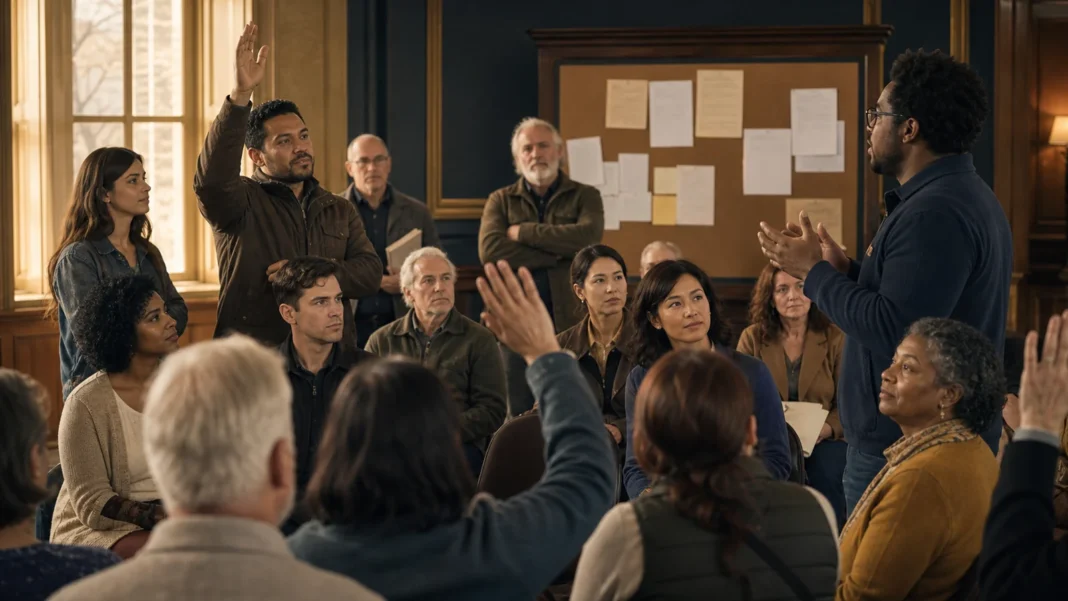

The quick answer: The First Amendment protects speech, press, assembly, and petition from improper government restriction. It does not require private agreement or remove every consequence, and it works best alongside careful listening and factual responsibility.
A protection for disagreement
Speech protection matters most when an idea is disputed, unfashionable, or critical of power. The First Amendment creates breathing room for advocacy, art, journalism, protest, religion, and political organizing. Courts have also recognized expressive conduct, while developing rules for threats, incitement, defamation, time and place regulation, and other hard cases.
The amendment binds government
A common confusion is to treat every social or workplace dispute as a First Amendment case. The constitutional rule primarily restrains government. Private publishers, employers, associations, and audiences often have their own rights to respond, moderate, criticize, or decline to amplify.
Freedom is not a fact-check
A statement can be legally protected and still be inaccurate, cruel, or irresponsible. Citizenship therefore asks more than avoiding censorship. It asks speakers to verify, correct, provide context, and remember that attention is a limited public resource.
A country capable of conversation
At 250, America does not need less debate. It needs better debate: confident enough to tolerate dissent, disciplined enough to distinguish claims from evidence, and generous enough to hear a neighbor’s meaning before assigning a motive. Free speech provides the space; civic character determines what we build in it.
Quick facts
- The First Amendment protects speech, press, assembly, petition, and religious freedom.
- Expressive conduct can receive constitutional protection.
- Not all speech is protected in every setting or circumstance.
- The First Amendment generally limits government, not every private decision.
Questions readers ask
Does free speech mean anyone must provide me a platform?
Generally no. Protection from government restriction is different from a right to use a private person’s publication, venue, or service.
Can speech have consequences?
Yes. Other people may criticize, refuse to associate, or respond with their own speech, subject to applicable law.
Explore the sources
These primary and public-history resources are a good place to continue:
250 Pulse tells the American story with context, confidence, and room for every neighbor.