
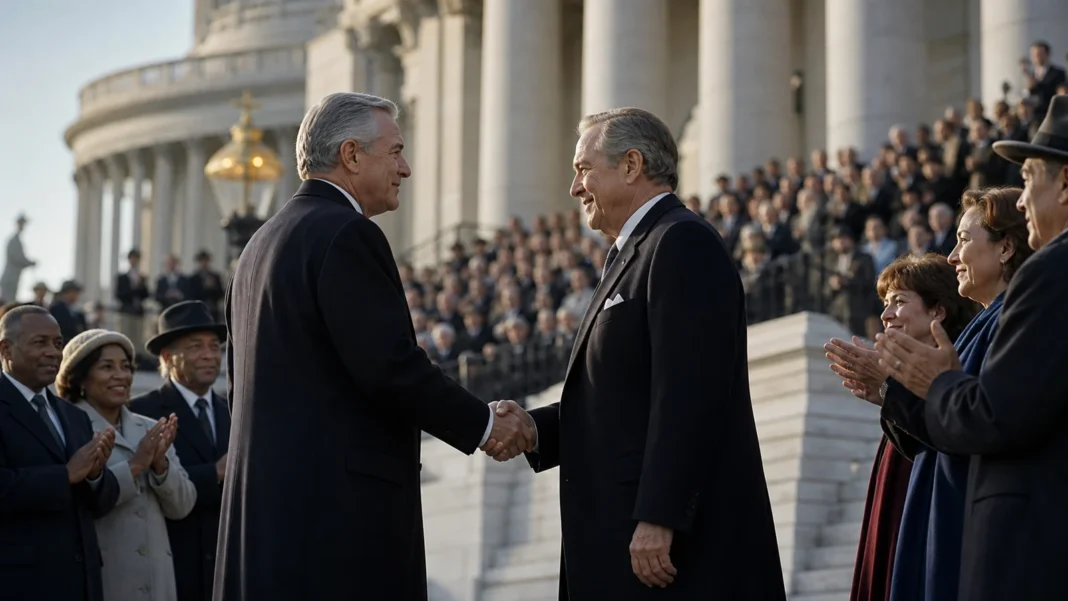

The quick answer: A peaceful transfer of power occurs when one presidential administration yields authority to the next through constitutional procedures, public ceremony, and institutional cooperation rather than force.
Power belongs to an office
The presidency is powerful, but it is temporary. Elections set a term, the Constitution defines succession, and the inauguration marks a public change in lawful authority. By tradition, the outgoing president accompanies the president-elect to the Capitol. The gesture says something larger than courtesy: the office continues while its holder changes.
Ceremony supports continuity
The oath, procession, congressional role, military honors, and departure of the former president help citizens see an abstract legal transfer. Behind the ceremony, agencies brief incoming teams, preserve records, and maintain essential services. Democracy depends on that unglamorous professional handoff.
Losing is part of self-government
Elections cannot provide self-government if only victory is legitimate. Parties may contest rules in court, demand recounts, organize opposition, and criticize the winner. The line that protects the republic is acceptance of the final lawful result and rejection of political violence.
A tradition worth rehearsing
At America’s 250th, peaceful transfer should not be treated as automatic. It survives because officials, parties, civil servants, service members, courts, media, and voters recognize constitutional process as more important than any single campaign. Restraint is not weakness here; it is democratic confidence.
Quick facts
- The presidential oath is set by Article II of the Constitution.
- Congress organizes inaugural ceremonies through a joint committee.
- The outgoing president traditionally accompanies the president-elect to the Capitol.
- Continuity planning begins well before Inauguration Day.
Questions readers ask
Is the peaceful transfer only a ceremony?
No. The public ceremony reflects a much larger legal and administrative transition across the executive branch.
Can election results still be challenged?
Yes. Recounts, audits, and court challenges are lawful parts of the system. Peaceful transfer means resolving disputes through those institutions and accepting their final outcome.
Explore the sources
These primary and public-history resources are a good place to continue:
- Joint Congressional Committee on Inaugural Ceremonies: Inaugural events
- National Archives: Electoral College
250 Pulse tells the American story with context, confidence, and room for every neighbor.