
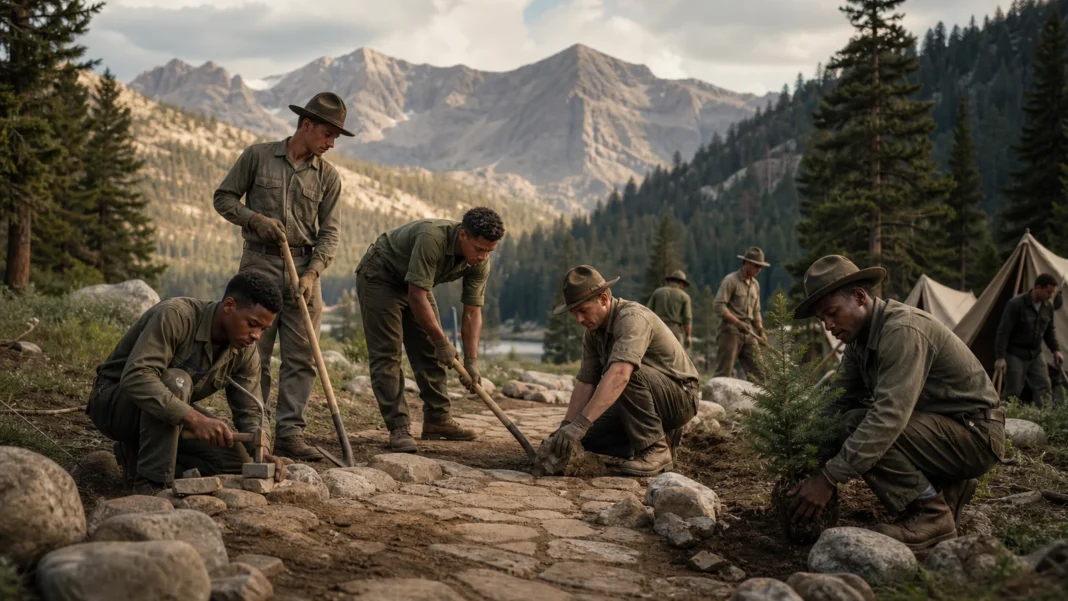

The quick answer: The Civilian Conservation Corps operated from 1933 to 1942, employing roughly three million men in conservation and public-land projects. Enrollees planted trees, fought erosion and fire, built park facilities, and sent most of their monthly pay home.
Two emergencies, one program
The Great Depression left young people unemployed while erosion, deforestation, and poor land practices damaged the country. Franklin Roosevelt’s emergency conservation program joined those problems: provide food, shelter, training, and wages in exchange for work that restored public resources.
A camp and a paycheck
Federal departments recruited enrollees, operated camps, and supervised technical projects. A typical member received thirty dollars per month and sent twenty-five home. Life was regimented and physically demanding, but many participants gained education, nutrition, experience, and confidence during a period of scarce opportunity.
The landscape as a record
CCC crews built trails, roads, shelters, fire lookouts, bridges, campgrounds, and erosion controls across state and national parks, forests, and rangelands. They planted billions of trees. Visitors still walk, drive, picnic, and camp within that workmanship, often without knowing who put it there.
A large achievement with limits
The program reflected its era’s segregation and gender rules; its primary enrollment model excluded women and administered Black enrollees unequally. Remembering those limits belongs beside the accomplishment. At 250, the CCC remains evidence that public work can restore dignity and shared assets—especially when access is designed more fairly.
Quick facts
- The CCC began in 1933 and ended in 1942.
- Roughly three million men enrolled.
- A typical monthly wage was thirty dollars, with twenty-five sent home.
- Projects included reforestation, erosion control, fire protection, trails, roads, and park buildings.
Questions readers ask
Was the CCC part of the military?
It was a civilian program. The Army helped operate camps, while civilian land agencies supervised much of the work.
Can people still see CCC projects?
Yes. Trails, roads, structures, forests, and recreation facilities survive across many state and national parks.
Explore the sources
These primary and public-history resources are a good place to continue:
250 Pulse tells the American story with context, confidence, and room for every neighbor.