
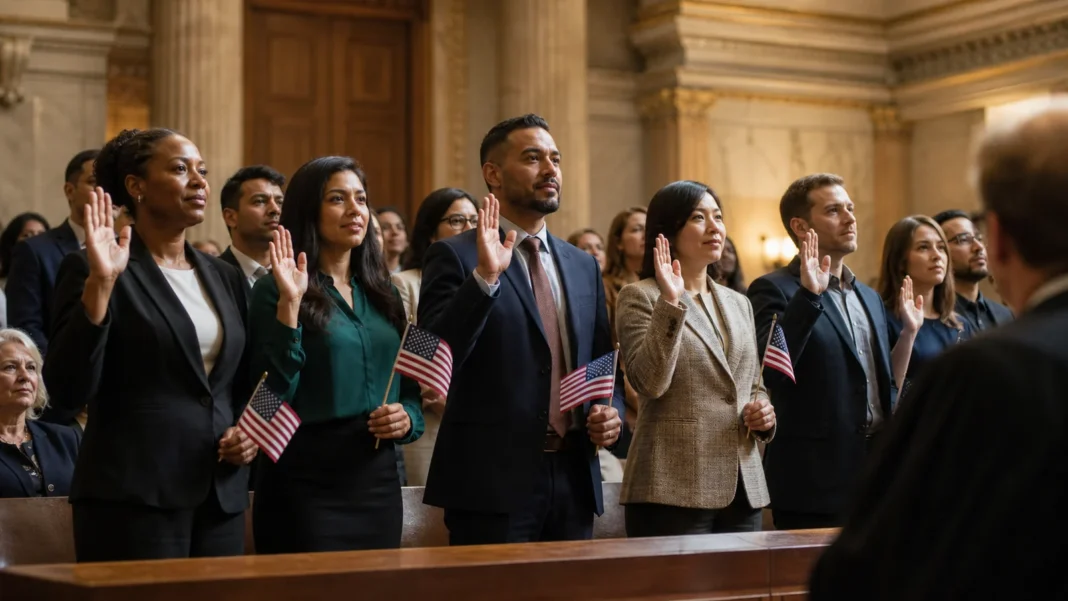

The quick answer: The Oath of Allegiance is the final step in naturalization for most applicants. After taking it at an authorized ceremony, the applicant becomes a U.S. citizen.
A process reaches its public moment
Naturalization includes eligibility review, an application, biometrics where required, an interview, and English and civics testing for many applicants. The ceremony is the culmination. Participants raise their right hands and promise allegiance to the United States, its Constitution, and its laws.
The oath speaks in verbs
Its commitments include supporting and defending the Constitution, bearing true faith and allegiance, and accepting forms of national service when required by law. Limited modifications or exemptions exist in defined circumstances. The core message is active: citizenship includes rights, but also duties and participation.
Many journeys, one citizenship
People arrive at the oath by different routes—work, family, refuge, service, study, or long residence. The ceremony does not erase those histories. It joins them to a common political identity and gives the nation new voters, jurors, officeholders, volunteers, and neighbors.
Renewing the word “we”
At America’s 250th, naturalization ceremonies are among the country’s clearest expressions of renewal. The nation is not only inherited. It is continually chosen by people willing to learn its system, make a public promise, and take responsibility for its future.
Quick facts
- An approved applicant is not a citizen until taking the oath, unless a lawful exception applies.
- USCIS and eligible courts conduct naturalization ceremonies.
- The oath includes promises to support and defend the Constitution.
- New citizens receive a Certificate of Naturalization after the ceremony.
Questions readers ask
Is the ceremony only symbolic?
No. It is both symbolic and legally decisive: citizenship begins when the required oath is administered.
Do all applicants use exactly the same wording?
Most do, but federal law allows limited modifications or waivers for certain religious, conscientious, or disability-related circumstances.
Explore the sources
These primary and public-history resources are a good place to continue:
250 Pulse tells the American story with context, confidence, and room for every neighbor.