

The quick answer: The Fourth of July commemorates the adoption of the Declaration of Independence on July 4, 1776. Its traditions grew over time, combining public ceremony with local celebrations that invite each generation to consider what independence requires.
From declaration to national holiday
The Second Continental Congress adopted the Declaration on July 4, 1776. Philadelphia marked the first anniversary with bells, music, bonfires, and fireworks, but nationwide observance developed gradually. Celebrations became more common after the War of 1812, and Congress made Independence Day a federal holiday in 1870.
A national holiday made locally
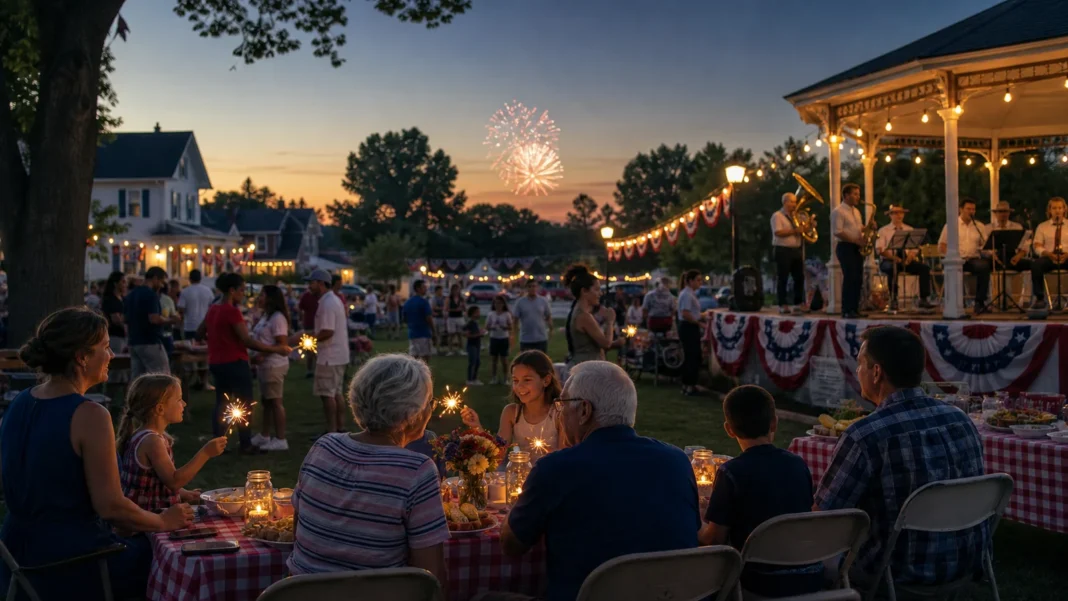
The familiar ingredients are remarkably local: a fire department leading a parade, veterans carrying colors, neighbors sharing food, children decorating bicycles, a town band playing before dark. These rituals do not require one single style of celebration. They let communities place their own accents inside a shared anniversary.
Fireworks and public memory
Fireworks give the night its spectacle, but readings, naturalization ceremonies, concerts, and historic-site programs give the day its civic depth. The best celebrations join delight with memory. They acknowledge that the Declaration stated an ideal whose promise Americans have spent generations widening.
A useful annual question
At America’s 250th, July Fourth can be both confident and thoughtful. Love of country is not weakened by asking how its principles can be lived more fully. The holiday endures because it offers joy, gratitude, and a peaceful annual invitation to renew the work of citizenship.
Quick facts
- The Declaration of Independence was adopted on July 4, 1776.
- Philadelphia celebrated the first anniversary in 1777.
- Congress recognized Independence Day as a federal holiday in 1870.
- Parades, public readings, concerts, picnics, and fireworks have all appeared in American celebrations.
Questions readers ask
Why July 4 rather than July 2?
Congress voted for independence on July 2, but the Declaration was adopted on July 4, the date printed on the document and remembered by the national holiday.
Were fireworks part of early celebrations?
Yes. Fireworks appeared in Philadelphia’s 1777 anniversary celebration and became one of the holiday’s most visible traditions.
Explore the sources
These primary and public-history resources are a good place to continue:
250 Pulse tells the American story with context, confidence, and room for every neighbor.