
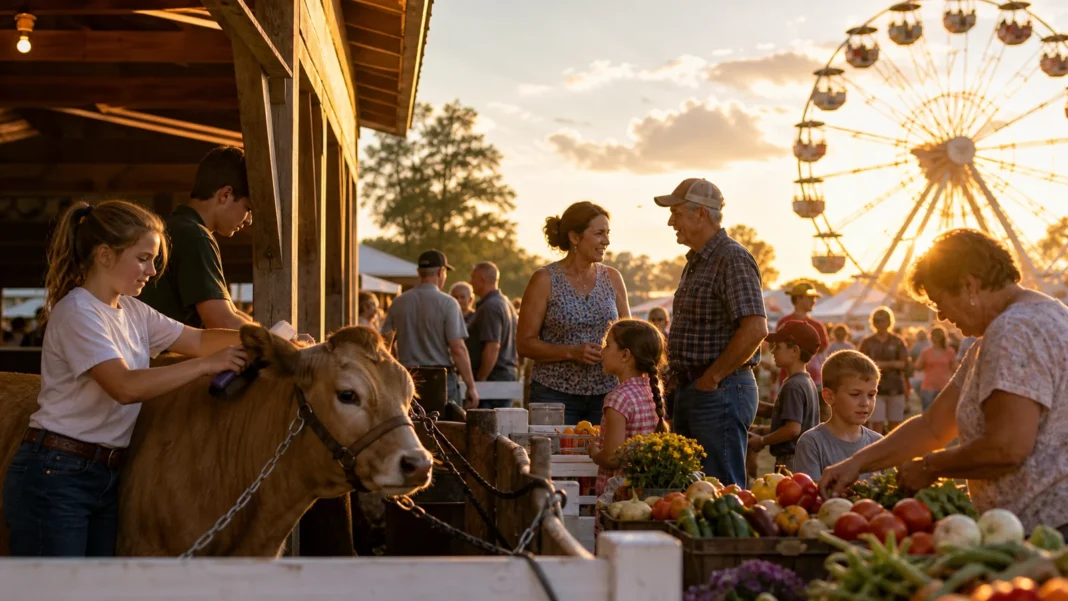

The quick answer: American county and state fairs grew as places to exchange agricultural knowledge and reward excellent work. They evolved into broad community gatherings where livestock, produce, crafts, youth projects, food, and entertainment share one lively public space.
Improvement became celebration
Nineteenth-century agricultural societies organized fairs to compare crops, livestock, tools, and methods. A blue ribbon offered recognition, but the deeper purpose was learning: neighbors could see which practices worked. Education and celebration grew together.
The community on display
A fair honors forms of skill that can be overlooked elsewhere. A carefully raised animal, preserved fruit, quilt, photograph, pie, robotics project, or carved object receives a public audience. Youth programs give young people real responsibility and let adults recognize work measured in months rather than minutes.
Tradition that makes room
Fairs have adapted as communities have changed. Tribal, state, and local fairs showcase regional art, immigrant foodways, contemporary craft, urban agriculture, science education, and new technology alongside long-standing contests. The most durable traditions are not frozen; they keep inviting more neighbors into the tent.
Why the fair still matters
The midway brings excitement, but the fair’s civic value is the encounter. Rural and urban visitors, producers and consumers, experts and beginners meet face to face. At 250, fairs remain compact celebrations of American enterprise: make something well, share what you know, cheer a neighbor, and try again next year.
Quick facts
- American agricultural fairs developed widely during the nineteenth century.
- Competition was designed partly to encourage better farming and craftsmanship.
- Fairs often combine education, youth development, arts, food, livestock, and entertainment.
- State-fair craft traditions reach from the mid-nineteenth century to the present.
Questions readers ask
Were fairs always mainly about rides?
No. Agricultural improvement, education, exhibitions, and competition were central to early fairs; entertainment expanded around those functions.
Why do craft competitions matter?
They give local skill a public stage, preserve techniques, encourage experimentation, and connect makers across generations.
Explore the sources
These primary and public-history resources are a good place to continue:
- Smithsonian American Art Museum: State Fairs – Growing American Craft
- Smithsonian Libraries: Agricultural Fairs in America
250 Pulse tells the American story with context, confidence, and room for every neighbor.