

The quick answer: Baseball developed from older bat-and-ball games into a distinctly American organized sport during the nineteenth century. It became the national pastime because communities played it, newspapers narrated it, and generations used the game to debate belonging and opportunity.
A game Americans remade
Baseball was not invented in a single moment. Americans adapted several older bat-and-ball games, and different regional rules competed before the New York style prevailed. By the Civil War era, clubs, box scores, tours, and common rules were helping turn local play into a national language.
Nine innings, many Americas
Professional baseball often failed to live up to the democratic image attached to it. Segregation excluded Black players from the established major leagues, while the Negro Leagues built extraordinary institutions and stars. Immigrants, women, Native players, Latino communities, and Asian American teams also made the game their own. Baseball history is richer when all those diamonds are visible.
The rhythm of a long season
Baseball offers time for anticipation: the pause before a pitch, the accumulation of statistics, the story of a 162-game season. It is individual and collective at once. A batter stands alone, but every run depends on teammates, positioning, coaching, and a chain of decisions.
The neighborhood version endures
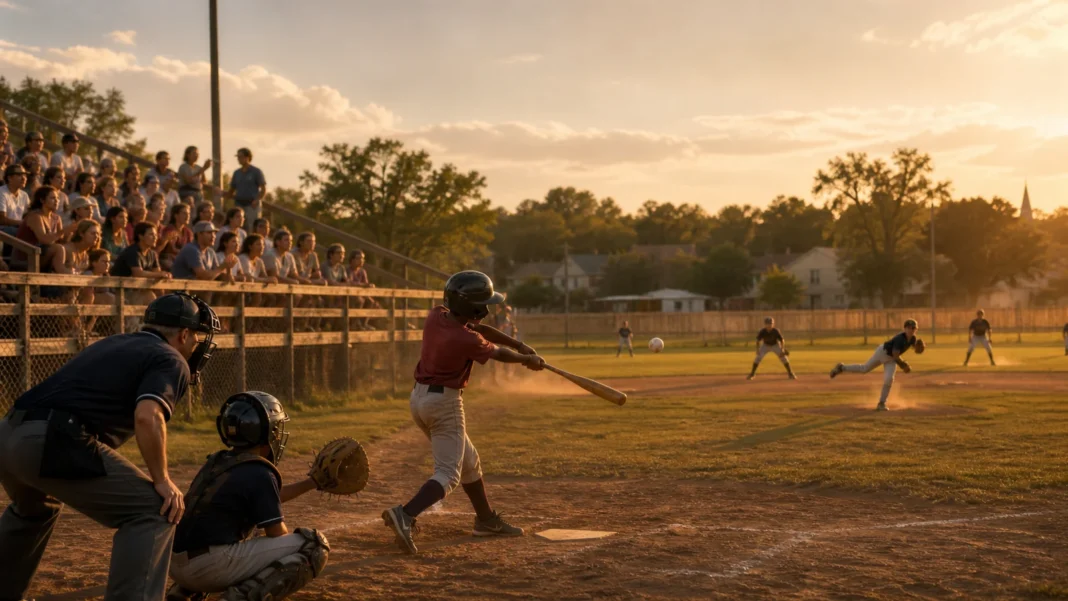
The sport’s cultural power does not belong only to major-league stadiums. It lives in sandlots, school fields, minor-league parks, church teams, rec leagues, scorebooks, and conversations between generations. At 250, baseball still rewards a useful American instinct: stay ready, because the next chance is coming.
Quick facts
- American baseball evolved from several earlier bat-and-ball games.
- A newspaper called baseball the national pastime as early as 1856.
- Soldiers helped spread the game during and after the Civil War.
- Baseball collections document sport alongside immigration, race, labor, media, and community life.
Questions readers ask
Was baseball invented in Cooperstown?
No. Historians trace it to several older games that evolved over time; the single-inventor Cooperstown story is a myth.
Why is baseball useful for studying American history?
Its institutions and stories intersect with segregation, immigration, urban growth, mass media, labor, consumer culture, and civic identity.
Explore the sources
These primary and public-history resources are a good place to continue:
- Library of Congress: Baseball Americana – Origins and Early Days
- Library of Congress: Baseball Across a Changing Nation
250 Pulse tells the American story with context, confidence, and room for every neighbor.