
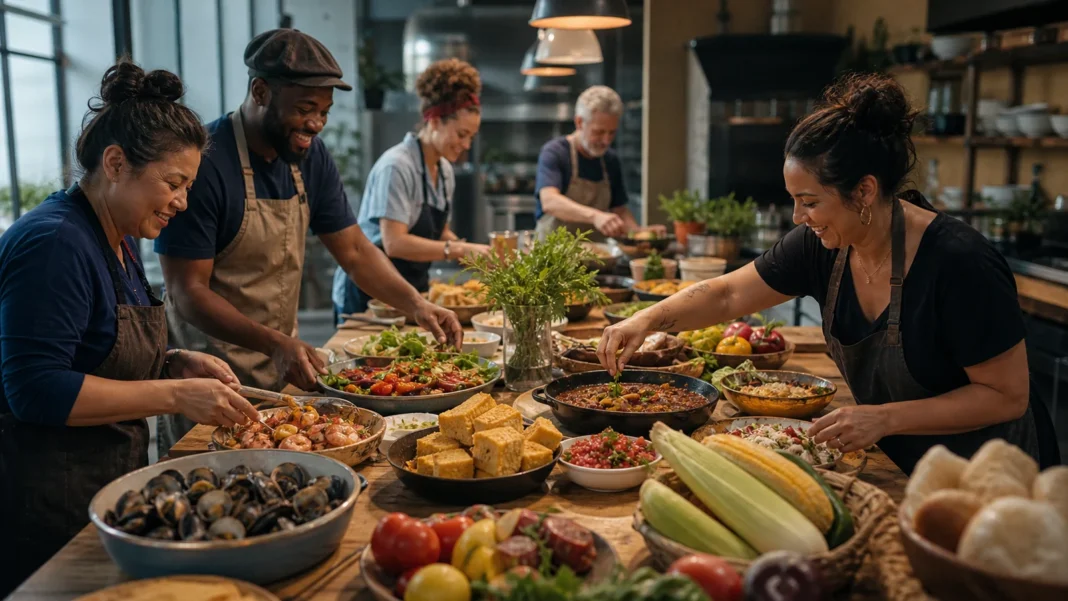

The quick answer: Foodways are the traditions around growing, gathering, preparing, serving, and eating food. In the United States, regional foodways reflect local environments and the knowledge carried by Native peoples, migrants, immigrants, workers, and families.
Food is more than a recipe
A dish is only one part of a foodway. The term also includes where ingredients come from, who prepares them, the tools and techniques used, when the food is served, and the stories told around it. A clambake, fish fry, barbecue, potluck, or harvest meal is both food and social practice.
Regions grow from place and movement
Climate and geography matter: coastal waters, grasslands, forests, deserts, river valleys, and growing seasons shape what is available. So does movement. Enslaved people, Indigenous nations, immigrant communities, railroad workers, farm laborers, and returning service members all carried knowledge that changed local tables.
Tradition is an active verb
Authenticity does not require a recipe to remain untouched. Families substitute what they can find, combine neighboring techniques, adjust to new tools, and teach children in different kitchens. Korean Southern cooking or a regional taco style can be both new and rooted. Adaptation is often how a tradition stays alive.
Eat curiously and give credit
At America’s 250th, regional food offers an inviting route into national history. Ask who grew it, who cooked it, where the technique came from, and how the dish changed. Appreciation becomes more meaningful when it includes names, labor, and context—not just flavor.
Quick facts
- Foodways include production, preparation, service, consumption, ritual, and storytelling.
- Regional traditions reflect both local ecology and human migration.
- Family recipes often preserve cultural memory across generations.
- American Folklife Center collections document food traditions in many communities and occupations.
Questions readers ask
What is the difference between food and foodways?
Food is what people eat; foodways include the complete cultural system around acquiring, making, sharing, and understanding it.
Can a new fusion dish be traditional?
Traditions continually adapt. A newer dish can become part of a community’s foodway when people make, share, and pass it on with meaning.
Explore the sources
These primary and public-history resources are a good place to continue:
- Library of Congress: Foodways in the American Folklife Center
- Smithsonian: What’s on Your Neighbor’s Table?
250 Pulse tells the American story with context, confidence, and room for every neighbor.