
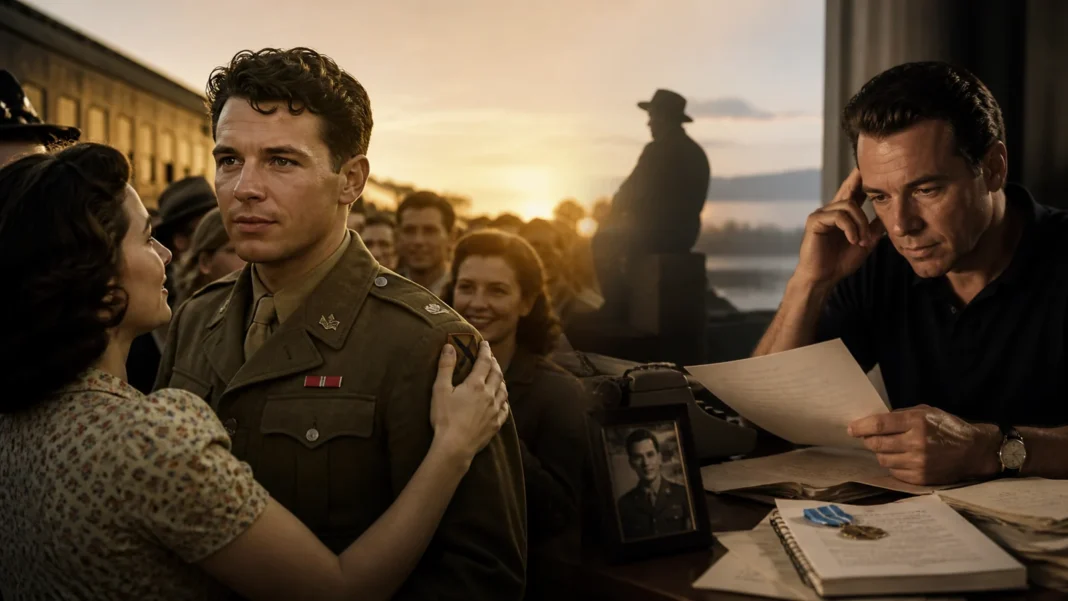

The quick answer: Audie Murphy became one of the most decorated American soldiers of World War II, then used his public profile to speak candidly about the psychological effects of combat.
From Texas poverty to the Army
Murphy was born into a sharecropping family in Texas in 1924 and left school young to help support his siblings. Orphaned as a teenager, he tried to enter military service after the United States joined World War II. The Army accepted him in 1942 after other branches rejected him for being undersized.
His background made the uniform a dramatic change, but not an escape from responsibility. Murphy advanced from private to staff sergeant and received a battlefield commission while serving with the 3rd Infantry Division in the Mediterranean and Europe.
A day in the Colmar Pocket
On January 26, 1945, near Holtzwihr, France, Murphy ordered his company back to safer ground while he remained forward to direct artillery. He then climbed onto a burning tank destroyer and used its machine gun against an advancing force.
The action brought him the Medal of Honor. It is remembered because one soldier accepted extreme personal danger to give his unit time. Yet the complete story of courage does not end at the battlefield.
Fame did not erase the war
After returning home, Murphy became an actor and writer. Public success did not protect him from nightmares, sleeplessness, and other symptoms now associated with post-traumatic stress. He spoke about those struggles in an era when veterans were often expected to remain silent.
That candor expanded his service. By naming the burden, he helped other veterans and families recognize that courage after war can mean seeking care, telling the truth, and refusing shame.
Remember the whole veteran
A country can honor military valor without turning war into spectacle. Murphy’s life encourages a fuller remembrance: the young person who serves, the unit that depends on him, the family that welcomes him home, and the mind that continues carrying what happened.
At America’s 250th, that perspective is a patriotic obligation. Gratitude becomes meaningful when it includes competent veterans’ care, attention to military families, and room for veterans to be more than the hardest day of their lives.
Quick facts
- Murphy served with the U.S. Army’s 3rd Infantry Division in World War II.
- He rose from private to officer and received the Medal of Honor.
- He later became a successful actor and wrote about his wartime experience.
- He publicly discussed combat-related psychological symptoms before PTSD became a formal diagnosis.
Questions readers ask
Why was Audie Murphy awarded the Medal of Honor?
He remained in an exposed position during an attack in France, directed artillery, and fought from a burning tank destroyer while his company withdrew and reorganized.
Why include his postwar life?
Because it shows that national gratitude should recognize both visible valor and the less visible work of recovery after service.
Explore the sources
These primary and public-history resources are a good place to continue:
250 Pulse tells the American story with context, confidence, and room for every neighbor.